The country
Burkina Faso is a West African country with significant development challenges. Its economy, predominantly based on subsistence agriculture, is heavily influenced by a tropical climate with alternating dry and rainy seasons and poor soil. Despite attempts at economic diversification, the country remains one of the poorest in the world, with a population that depends largely on a fragile agricultural sector that is susceptible to climate change.
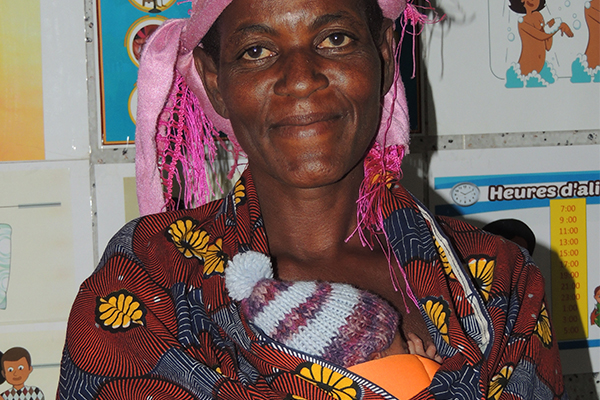
In 2023, the population of Burkina Faso was approximately 23,025,776, with a population growth of 2.3%. The population distribution is predominantly rural, with 74.2% of the population living in rural areas. Life expectancy at birth is approximately 60 years for men and 65 years for women.
Burkina Faso’s political history has been marked by instability and regime changes. In recent decades, the country has adopted a multi-party system, but challenges to democracy and the rule of law persist. Civil society is active, but social and political tensions remain constant, especially in rural areas.
Burkina Faso faces a serious health crisis, exacerbated by a context of insecurity and instability. The health system is fragile, with significant shortages of medical personnel, medicines and infrastructure, especially in rural areas. Infectious diseases such as malaria, tuberculosis and diarrhoeal diseases are endemic. Malnutrition, particularly among children, is a widespread problem, especially in the Sahel regions. In recent years, growing insecurity has led to the closure of many health centres and limited access to care for millions of people.
In 2022, the neonatal mortality rate in Burkina Faso was approximately 25 deaths per 1,000 live births. This figure highlights the urgent need to improve neonatal care in the country, where access to quality health services is limited and resources are scarce. The Paolo Chiesi Foundation, through the NEST project (Neonatal Essentials for Survival and Thriving), is working to address these challenges and improve neonatal survival in Burkina Faso.
(Source: data.who.int)
Burkina Faso in numbers
Burkina Faso in numbers
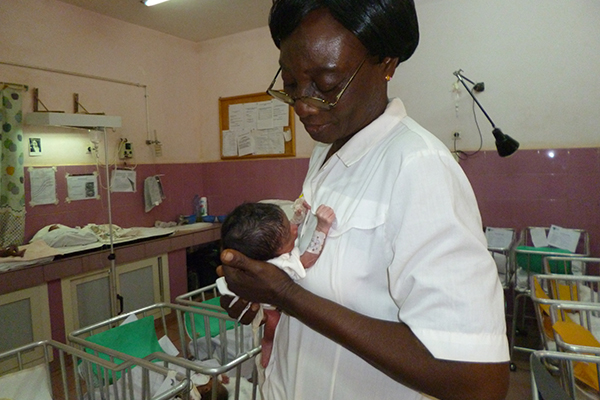
Our intervention
The Paolo Chiesi Foundation has been working in Burkina Faso since 2010 through a collaboration with the Hôpital Saint Camille de Ouagadougou (HOSCO), one of the country’s leading referral hospitals for maternal and child health. The project aims to improve the quality of neonatal care through an integrated approach that combines training, organizational innovation, infrastructure enhancement, and healthcare system strengthening.
Over the years, the Foundation has supported the creation and progressive development of the neonatology department, contributing to the introduction of essential technologies for the care of premature and complicated infants, including non-invasive ventilation (bubble CPAP), the strengthening of centralized oxygen and medical air systems, and the acquisition of equipment for clinical monitoring and stabilization of newborns at birth. At the same time, it promotes continuous improvement in the quality of care through healthcare personnel training, clinical auditing activities, strengthening the prevention and control of nosocomial infections, and monitoring quality indicators.
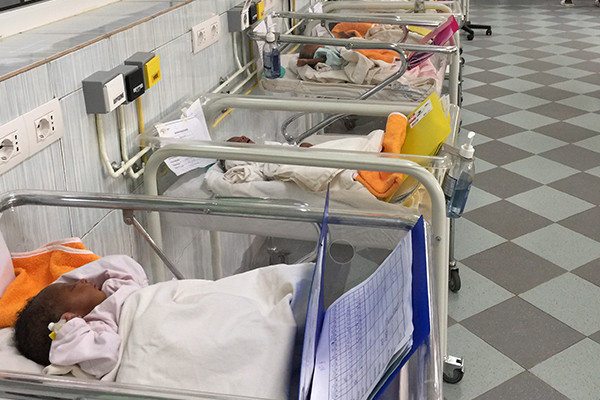
The Foundation also supports the consolidation of Kangaroo Care and Family-Centered Care, promoting the continuation of care for parents with their newborns during hospitalization and encouraging continuity of care after discharge through home follow-up programs.
Since 2020, the Foundation has also supported the Réseau de Périnatologie de la Région du Centre (RPRC), formalized by the Ministry of Health in 2022, a network that brings together the main hospitals and birth centers in Ouagadougou with the aim of improving the referral and counter-referral system for critically ill newborns, harmonizing clinical protocols, promoting shared training programs and strengthening the collection and use of data to improve the quality of care.
Our intervention
The Paolo Chiesi Foundation has been working in Burkina Faso since 2010 through a collaboration with the Hôpital Saint Camille de Ouagadougou (HOSCO), one of the country’s leading referral hospitals for maternal and child health. The project aims to improve the quality of neonatal care through an integrated approach that combines training, organizational innovation, infrastructure enhancement, and healthcare system strengthening.
Over the years, the Foundation has supported the creation and progressive development of the neonatology department, contributing to the introduction of essential technologies for the care of premature and complicated infants, including non-invasive ventilation (bubble CPAP), the strengthening of centralized oxygen and medical air systems, and the acquisition of equipment for clinical monitoring and stabilization of newborns at birth. At the same time, it promotes continuous improvement in the quality of care through healthcare personnel training, clinical auditing activities, strengthening the prevention and control of nosocomial infections, and monitoring quality indicators.
The Foundation also supports the consolidation of Kangaroo Care and Family-Centered Care, promoting the continuation of care for parents with their newborns during hospitalization and encouraging continuity of care after discharge through home follow-up programs.
Since 2020, the Foundation has also supported the Réseau de Périnatologie de la Région du Centre (RPRC), formalized by the Ministry of Health in 2022, a network that brings together the main hospitals and birth centers in Ouagadougou with the aim of improving the referral and counter-referral system for critically ill newborns, harmonizing clinical protocols, promoting shared training programs and strengthening the collection and use of data to improve the quality of care.
Our main activities in Burkina Faso
Training and mentoring of healthcare workers to improve the quality of neonatal care
Strengthening neonatology through improved infrastructure, oxygen therapy systems and essential equipment
Promotion of Kangaroo Care and Family-Centered Care, with follow-up programs for newborns after discharge
Development of the Réseau de Périnatologie de la Région du Centre (RPRC) to strengthen the referral and counter-referral system, training and coordination between health facilities
We also work in