The country
Peru lies on the Pacific Ocean, in western South America, and borders Ecuador, Colombia, Brazil, Bolivia and Chile. Its territory is divided into three major regions: the desert coast in the west, home to the capital, Lima; the Andean highlands in the centre; and the Amazon rainforest in the east. About a third of the population lives on the coast and around half in the Andean highlands, while the rainforest is sparsely populated. Peru is the world’s second-largest copper producer, and mining remains a pillar of the economy, which grew by 3.4% in 2025. Between 2004 and 2013 poverty fell from 60% to 33%, but progress has slowed since then, and more than 70% of workers are employed in the informal economy.
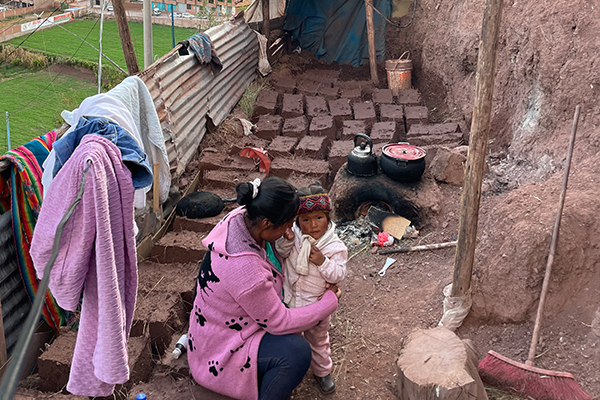
With around 34 million inhabitants, Peru has a largely urban population, with about four in five people living in cities, and a fertility rate of about two children per woman. Life expectancy at birth is about 76 years for men and 80 for women. In 2023 the country’s Human Development Index stood at 0.794, ranking 79th in the world. However, inequality reduces this value by about a fifth, and the gap between the Lima region and the Andean and Amazonian areas remains wide.
The cradle of great Andean civilisations, including the Inca, Peru declared its independence from Spain in 1821. Alongside Spanish, Quechua is also an official language. Over the past decade the country has gone through a long period of political instability, with nine presidents in ten years. In July 2026 Keiko Fujimori took office as the first woman elected to the presidency.
Since 1990, under-five mortality has fallen from 81 to 13 deaths per 1,000 live births. Neonatal mortality stands at 7 deaths per 1,000 live births, and maternal mortality at 51 per 100,000. Among the environmental challenges affecting respiratory health is air pollution in Lima, while mortality from chronic obstructive pulmonary disease (COPD) stands at 15 deaths per 100,000 people. In this context, the Foundation works through the GASP Model (Global Access to Sustainable Pulmonology) to strengthen the prevention, diagnosis and treatment of chronic respiratory diseases in the Cusco region.
(Sources: United Nations, World Population Prospects 2024; UNICEF; WHO, Global Health Estimates; UNDP, Human Development Report 2025; Global Data Lab; World Bank; World Bank, Macro Poverty Outlook; CIA World Factbook)
Peru in numbers
Peru in numbers
Our intervention
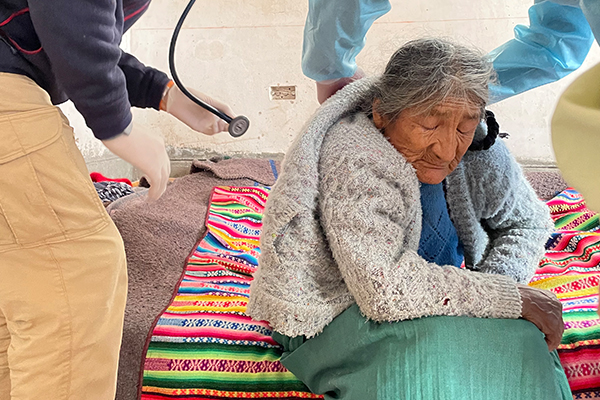
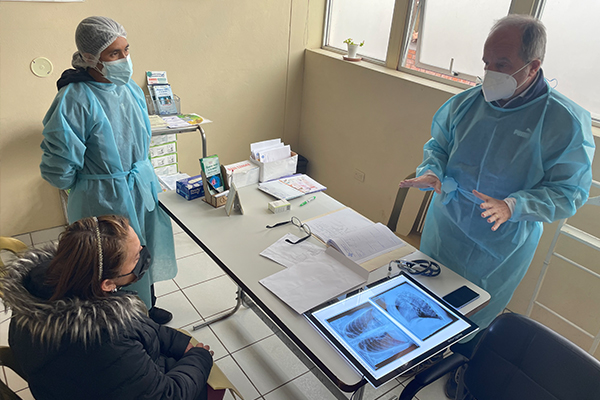
Since 2018, the Paolo Chiesi Foundation has supported the development of services for the prevention, diagnosis and management of chronic respiratory diseases in the Cusco region through the GASP Model – Global Access to Sustainable Pulmonology.
Initially developed at Santa Rita Polyclinic, the project has progressively expanded to involve satellite health centers and two major hospitals in the region, Hospital Antonio Lorena and Hospital Regional del Cusco, strengthening a local network for the diagnosis and management of respiratory diseases.
A central element is strengthening the skills of healthcare professionals through annual SEPAR training missions in Cusco and short training placements for Peruvian professionals at specialist centers in Spain.
The project also includes screening activities for at-risk populations and workers exposed to occupational risks, as well as health campaigns in remote communities, bringing prevention, diagnosis and health education closer to populations with more limited access to healthcare.r
Our intervention
Since 2018, the Paolo Chiesi Foundation has supported the development of services for the prevention, diagnosis and management of chronic respiratory diseases in the Cusco region through the GASP Model – Global Access to Sustainable Pulmonology.
Initially developed at Santa Rita Polyclinic, the project has progressively expanded to involve satellite health centers and two major hospitals in the region, Hospital Antonio Lorena and Hospital Regional del Cusco, strengthening a local network for the diagnosis and management of respiratory diseases.
A central element is strengthening the skills of healthcare professionals through annual SEPAR training missions in Cusco and short training placements for Peruvian professionals at specialist centers in Spain.
The project also includes screening activities for at-risk populations and workers exposed to occupational risks, as well as health campaigns in remote communities, bringing prevention, diagnosis and health education closer to populations with more limited access to healthcare.
Our main activities in Peru
Strengthening respiratory health services, through the involvement of Santa Rita Polyclinic, satellite health centers and the main hospitals in the Cusco region.
Training and knowledge exchange, through annual training missions by SEPAR professionals in Peru and short training placements for Peruvian professionals at specialist centers in Spain.
Development of clinical guidelines, protocols and tools, to support more standardised and evidence-based management of respiratory diseases, including the development of a clinical practice guideline for COPD management.
Screening, prevention and community awareness, with a particular focus on at-risk populations, workers exposed to occupational risks and remote communities, helping bring respiratory health services closer to people with limited access to care.
We also work in