A patient’s journey with a chronic respiratory disease rarely starts with a diagnosis. It starts earlier — with a symptom that goes unrecognized, a visit that never happens, a health system that isn’t equipped to respond in time.
A Symposium on the Patient Journey
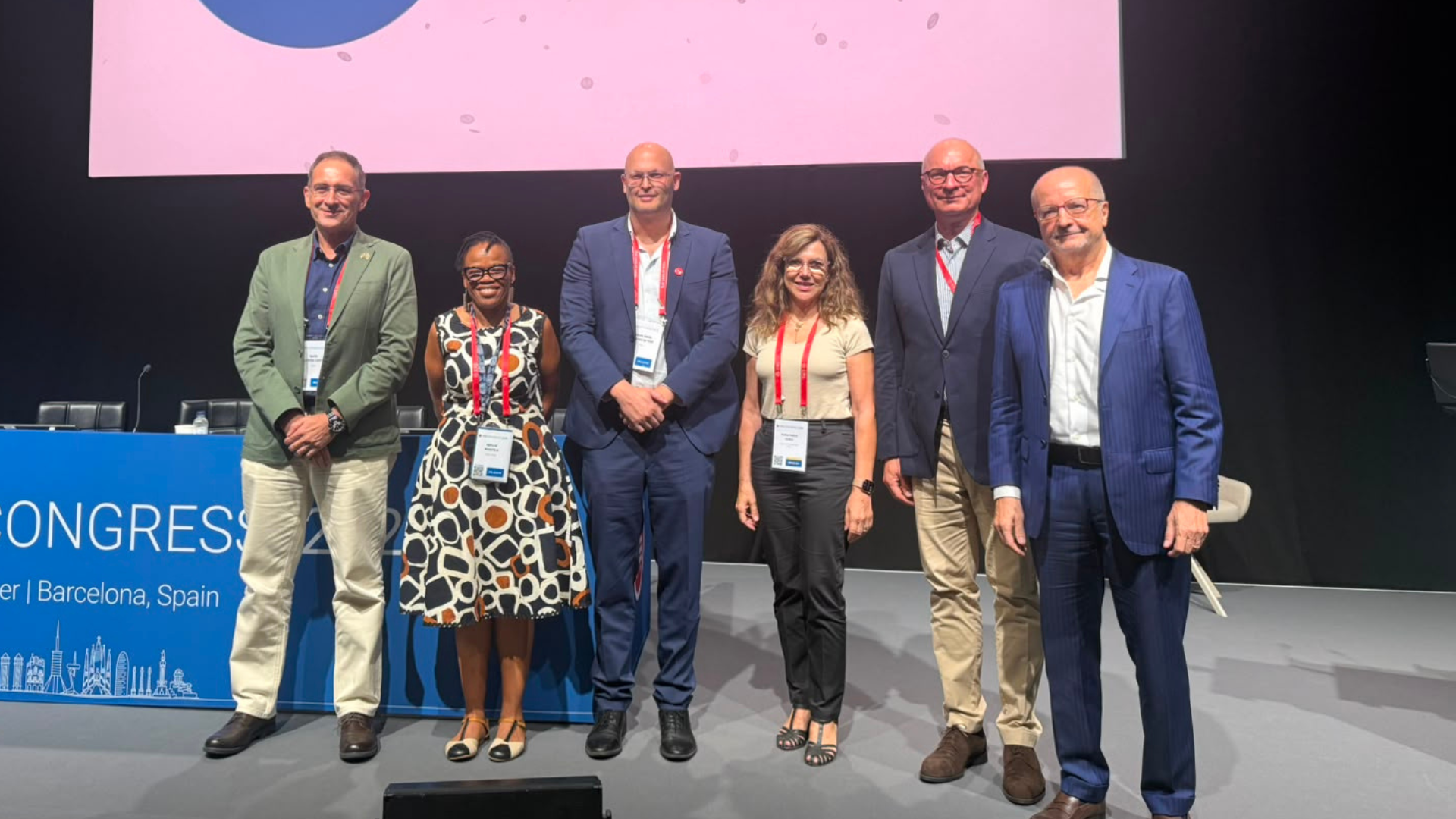
These challenges were at the heart of the symposium the Paolo Chiesi Foundation organized on 7 September at the European Respiratory Society (ERS) Congress 2026 in Barcelona, alongside Chiesi Group. Titled “From Symptoms to Care in Resource-Limited Settings: Mapping the Patient Journey of Chronic Respiratory Diseases,” the session brought together voices from academia, healthcare institutions and international organizations to examine what actually happens between a first symptom and long-term care in resource-limited settings.
Voices from the Stage?
Chaired by Mario Scuri, Respiratory Technical Advisor of the Foundation, the panel included Maria Paola Chiesi, President of the Paolo Chiesi Foundation; José Luis Castro, WHO Director-General’s Special Envoy for Chronic Respiratory Diseases; David de la Rosa Carrillo, President of the Sociedad Española de Neumología y Cirugía Torácica (SEPAR); Miguel Ángel Sánchez de Toro, of SEPAR Solidaria; and Refiloe Masekela, pediatric pulmonologist and Dean at the University of KwaZulu-Natal.
Together, the speakers mapped the gaps, delays, and structural barriers that keep people in resource-limited settings from receiving timely, appropriate respiratory care — from access to diagnostic tools to continuity of treatment and the strength of local health systems.
A Health Challenge with a Global South Face
Chronic respiratory diseases are already among the leading causes of death worldwide. The burden is substantial for both conditions. Asthma affected an estimated 363 million people and caused 442,000 deaths in 2023, while COPD caused 3.4 million deaths, making it the third leading cause of death worldwide.
Yet the burden is not equally distributed. Most asthma-related deaths occur in low- and lower-middle-income countries, where under-diagnosis and under-treatment remain major challenges; for COPD, nearly 90% of deaths among people under 70 occur in low- and middle-income countries.
Diagnostic capacity tells a similar story — spirometry, the basic test used to diagnose COPD and asthma, is available in only a small share of public health facilities in low-income countries, and essential medicines such as inhalers are often out of stock or unaffordable where they are needed most.
The GASP Model in Practice
The symposium drew on field evidence from GASP (Global Access to Sustainable Pulmonology), the Model the Foundation has built to respond exactly to this gap. The GASP Model grew out of a pilot training project in Guyana, developed with the British Columbia Lung Association, which led to the country’s first spirometry laboratory and a training program for local health workers, patients, and families. The Model has since expanded to Nepal and Peru: in 2024 alone, it reached more than 15,000 patients and trained 44 healthcare professionals in the diagnosis and management of asthma and COPD. In Peru specifically, growth has also been driven thanks to the collaboration with Chiesi España and SEPAR — the same partnership that shaped the panel in Barcelona. Rather than delivering care from the outside, GASP is built to strengthen local diagnostic and clinical skills, so that health systems and local professionals can sustain quality respiratory care over time.
Strengthening GASP through the Patient Journey
The symposium also highlighted how the Patient Journey can be used as a practical tool to strengthen the design and implementation of the GASP Model.
Rather than introducing a new model, the Patient Journey approach helps the Foundation and its partners look at respiratory care from the patient’s perspective. Mapping this journey makes it possible to identify where patients encounter gaps, delays and barriers in real-life settings, and where interventions can have the greatest potential to improve access, quality and continuity of care.
By combining field evidence with a better understanding of patients’ experiences, the Patient Journey can help inform how GASP interventions are designed, implemented and adapted to the realities of the contexts where people live and seek care.
Turning Commitments into Care
Mapping the journey, though, is only a starting point. Turning global commitments on chronic respiratory diseases into on-the-ground care — and evidence into practice — takes health-system strengthening, investment in local capacity, and long-term partnerships.
It’s the same approach the Foundation applies across its programs: not delivering solutions from the outside but working alongside local institutions and communities so they can lead and sustain change themselves.
Ultimately, this means building ownership and accountability into the way initiatives are designed from the outset.