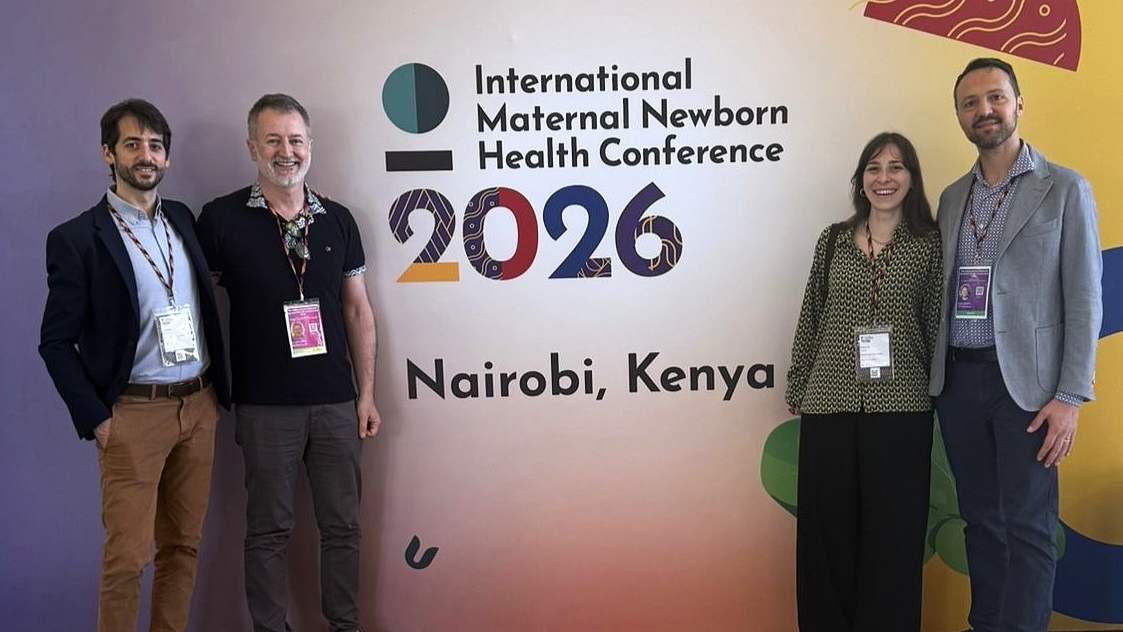
Nairobi as a Global Hub
From 23 to 26 March 2026, Nairobi hosted the International Maternal Newborn Health Conference (IMNHC), affirming itself among the leading global platforms for maternal and neonatal health dialogue. The event brought together over 1,800 participants from more than 87 countries, including 40 official government delegations, marking a significant convergence of institutions, healthcare professionals, researchers and international organisations.
The conference provided an opportunity to share results, tackle ongoing challenges and outline new strategies to improve care for mothers and newborns, especially in the most fragile contexts. The international community demonstrated growing awareness: achieving global goals now requires a qualitative leap, not just expanding access to services.
A Programme Designed to Turn Evidence into Action
The IMNHC 2026 programme alternated technical sessions, workshops and discussions, aiming to translate scientific evidence into tangible and applicable solutions in maternal-neonatal wards. The quality of care strongly emerged as a central theme.
In many countries, access to healthcare services has gradually increased, but this is no longer enough. It is the quality of care that makes the difference between survival and loss, between positive outcomes and preventable complications. Therefore, it is necessary to invest in high standards of care, continuous quality improvement, clinical supervision and the development of healthcare workers’ skills.
Within this framework, the need to rethink funding models was also discussed, moving beyond purely reporting-driven logics to direct resources towards real, measurable outcomes for mothers and newborns. This implies a strategic vision that includes strengthening health systems, access to essential commodities and support for innovation, so that effective solutions can be sustained and scaled up over time.
Collaboration, Data and People at the Centre of Care Systems
Another key message from the conference concerns collaboration. The principle of “one plan, one budget, one report” is more relevant than ever: to generate real impact, it is necessary to overcome fragmentation and isolated approaches, working in a coordinated manner and aligning strategies, resources and responsibilities.
In parallel, the urgency to strengthen and harmonise data collection and use systems clearly emerged. More integrated, consistent and truly usable data are fundamental to guide clinical and policy decisions, monitor progress and ensure real accountability.
The reflection, however, went beyond technical and organisational aspects, placing people at the centre. A fundamental role was recognised not only for healthcare workers, but also for families. Care systems must be redesigned in a more inclusive way: on one hand, supporting skills, motivation and ability of professionals, and on the other, valuing the role of families as integral part of the care pathway, from prevention to assistance. Without supported professionals and involved, aware families, no transformation can be truly sustainable.
Africa as a Driver of Change
Finally, IMNHC 2026 reaffirmed a crucial paradigm shift: Africa is no longer a passive recipient of aid, but an active protagonist in driving change.
In this context fits the work of the partnership EWENE – Every Woman Every Newborn Everywhere, which brought together national delegations for a structured moment of dialogue and joint work. The objective was to reflect on the main lessons from the conference, adapt them to different country contexts, identify key gaps in implementation and system, and define three to five medium-term strategic priorities, together with related technical assistance needs.
The message that emerged is clear: aligning to scale up what works, supporting measurable changes and strengthening country leadership is essential to achieve together the goals set by EWENE.
The Paolo Chiesi Foundation: A Space for Dialogue and Innovation
Within this dynamic context, the Paolo Chiesi Foundation played an active role as facilitator of the session with African country delegations, promoting strategic dialogue on medium-term priorities for maternal and neonatal health and facilitating the identification of specific technical assistance needs. The Foundation also stood out as a point of contact for several international donors and funders, consolidating collaboration among institutions, partners and field operators.
Moreover, its booth in the exhibitors’ area became a continuous exchange point throughout the conference: an open space for dialogue, where healthcare professionals, institutions and international partners met to share experiences, discuss daily challenges in neonatal wards and consider possible future collaborations.
One of the most explored topics at the booth was the NEST Model (Neonatal Essentials for Survival and Thriving), an approach designed to improve stabilisation and care for critically ill newborns through essential tools, ongoing training and clear organisation of clinical pathways. The idea behind the model is simple but powerful: in resource-limited settings, effectiveness does not depend on the complexity of solutions, but on their immediacy, adaptability and sustainability.
The NEST Model is developed and funded by the Paolo Chiesi Foundation and implemented by local and international partners, combining interventions tailored to the real needs of wards with constant support to clinical staff. Thanks to this collaboration, clearer and more structured protocols have been introduced, the quality of neonatal stabilisation has been improved and care pathways have become more reliable from the very first hours of the child’s life.
The immersive experience offered by virtual reality headsets enabled participants to visit the neonatal ward of Ngozi Regional Hospital in Burundi, making visible concrete solutions already applied in the field and encouraging direct discussion on care practices.
Looking Beyond the Conference
The IMNHC 2026 confirmed that maternal and neonatal health is a collective responsibility, requiring listening, coordination and the ability to turn evidence into concrete action. The legacy of the conference is clear: progress depends on the strength of partnerships, mutual trust and adapting solutions to different contexts. This spirit will continue to guide the work of the global community in the coming years.